
In the language of music notation, accidentals play a vital role in shaping the pitch and emotional tone of a piece. Among these accidentals—the sharp (♯), flat (♭), and natural (♮)—the natural symbol may appear the most understated, yet its role is fundamental. The natural symbol (♮) is used to cancel any previous alteration to a note caused by a sharp or flat. This allows the note to return to its original, “natural” pitch.

For musicians and learners alike, understanding the function of the natural symbol is key to reading and interpreting sheet music accurately. Whether you’re playing a classical piano piece or reading jazz charts, encountering a natural sign is inevitable. Learning how and why it’s used gives you better control over your musical expression and deepens your understanding of how composers manipulate pitch to create movement, tension, and resolution. Let’s explore this humble yet powerful musical symbol in depth.
Visual Description of Natural Symbol
The natural symbol (♮) resembles an angular, stylized letter “L” and is distinct from the sharp (♯) and flat (♭) signs. It consists of two vertical lines, with the top and bottom ends connected to right angles—one pointing upward, the other downward. This design makes it easy to recognize, especially when compared with the cross-like sharp symbol or the rounded flat sign.
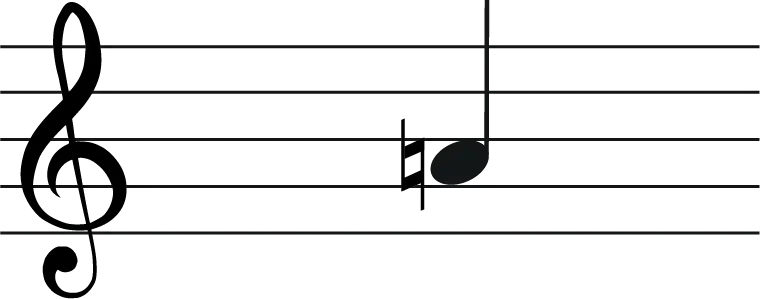
In standard sheet music notation, the natural symbol is placed immediately to the left of the notehead on the staff. Its placement is crucial because it tells the performer to play the note at its unaltered pitch, regardless of any key signature or previous accidentals in the measure. For example, if an A♯ has been used earlier in a measure, and a composer wants to return to A natural, they will mark the A with a natural sign.

Visually recognizing accidentals quickly is an essential skill for any musician, and being able to distinguish the natural symbol on the page is a step toward reading fluency.
Function and Purpose of Natural Symbol
The primary function of the natural symbol is to cancel a previous sharp or flat applied to a note. This alteration may have occurred due to the key signature or from an earlier accidental in the same measure. When you see a natural sign, it signals that the note should be played as it would appear on the white keys of the piano—without any chromatic modification.
For instance, let’s say you’re in the key of G major, which includes an F♯ in the key signature. If a composer wants you to play an F natural instead of the default F♯, they will write an F with a natural sign in front of it. This tells the performer to temporarily override the key signature for that note.

The natural symbol is essential for clarifying musical intention, especially in chromatic passages or modulations. It ensures that performers interpret pitches precisely as the composer intended, maintaining the integrity of harmonic and melodic lines.
Usage Examples of Natural Symbol
To fully understand the natural symbol, it’s helpful to see it in context. Imagine a melody where a composer introduces an A♭ to create a sense of tension or color. In the next bar, they may want to return to a more stable or expected pitch by using A natural. This change is notated by placing a natural sign before the A, canceling the previous A♭.
(Thêm ảnh nhưng chưa hiểu lắm)
Consider another case: within the same measure, a G♯ is introduced. Later in that measure, the composer wants to revert to G natural. Because accidentals apply only within the measure, a natural must be written before the next G to override the sharp. In the following measure, if no accidental is written, the pitch would revert to the key signature.
(Thêm ảnh nhưng chưa hiểu lắm)
Many beginners confuse naturals with sharps or flats or forget when to cancel accidentals. Practicing with short musical phrases and identifying accidentals—including naturals—helps build confidence and accuracy when sight-reading or composing.
Relation of Natural Symbol to Key Signatures
Key signatures define which notes are sharp or flat throughout a piece unless altered by accidentals. The natural symbol becomes particularly important when a composer wants to step outside of the established key, either momentarily or as a transition to a new key.
For example, in the key of D major (which includes F♯ and C♯), if a composer wants to use a C natural for a chromatic effect, they must notate it explicitly with a natural sign. This tells the performer to override the key signature just for that note.

Another interesting use of the natural sign is in what’s called a “courtesy accidental” or “reminder natural.” Even though a note might not technically need a natural sign in the next measure (because accidentals don’t carry over), composers often include a natural as a reminder for clarity. This is especially helpful in complex or fast-paced music, where a performer’s misreading could lead to an unintended pitch.
Thus, naturals play a key role in both harmonic expression and clarity of communication.
Listening Practice
Training your ear to recognize the effect of a natural sign is just as important as understanding it visually. The natural symbol creates subtle but important changes in pitch, often altering the emotional character of a musical phrase. Listening for these changes sharpens your awareness of accidentals and helps reinforce your theoretical knowledge through sound.
Try listening to pieces where chromatic movement is used, such as works by Bach, Chopin, or Debussy. In these compositions, notes frequently shift up and down by a semitone, with naturals restoring original pitches after sharp or flat alterations. Pay attention to how a melody might sound slightly more stable or “resolved” when a natural is introduced after tension from a sharp or flat.
You can also practice by following along with sheet music while listening. Highlight all the natural signs and note how they affect the music’s character. Over time, this active listening will make it easier for you to anticipate and interpret natural signs when you perform.
Practice Tips
Learning how to use and interpret the natural symbol becomes easier with focused practice. Start by writing out simple scales and then introduce sharps and flats. Use the natural symbol to return altered notes to their original state, reinforcing how it functions on the page.
One effective exercise is to take a simple melody and alter it with accidentals—then use naturals to revert back to the original pitches. You can also use blank staff paper or digital notation tools to quiz yourself: notate a sharp or flat version of a note and then cancel it with a natural.
If your website includes interactive elements, consider adding a drag-and-drop feature where users place the correct accidental next to given notes. Flashcards with “before and after” note visuals can also help reinforce recognition.
By practicing in both written and auditory formats, learners develop muscle memory for using naturals and confidence in reading real music.
The natural music symbol (♮) may look simple, but it plays a critical role in written music. It serves as a corrective tool, ensuring that altered pitches—sharpened or flattened—can return to their original state. Understanding its function enhances your ability to read and interpret music more fluently, and gives you greater insight into a composer’s intentions.
Whether you’re a beginner exploring music theory or a seasoned player working through complex scores, the natural sign is an essential element to master. From visual recognition to auditory awareness and written practice, becoming fluent with the natural symbol strengthens your overall musicianship.
Keep an eye out for this symbol in your sheet music, listen closely for its subtle effect on pitch, and use it wisely in your own compositions. The more you understand and engage with music symbols like the natural sign, the more expressive and accurate your playing will become.

Evan Carter is an American music educator. With a background in Musicology and over 10 years of experience, he specializes in music theory and notation. Evan creates clear, accessible content to help learners of all levels understand the language of music through symbols, structure, and sound.
